

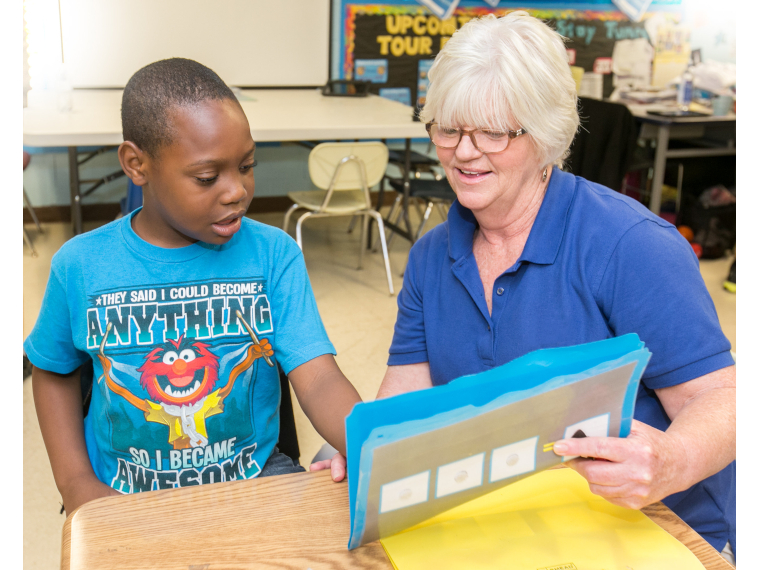
Written by Tanya Terry, with photos provided by Easterseals MORC
Autism Acceptance Month, recognized in April, was formerly known as Autism Awareness Month. The month reflects society’s progress in understanding autism and the need to shift focus toward acceptance and inclusion, according to Lindsay Calcatera.
Calcatera, who is the director of communications Easterseals MORC, pointed out autism diagnoses are now occurring in approximately 1 in 31 births.
“Maybe 10, 15 years ago, you may have never met a person with autism,” Calcatera added. “And I think now almost everybody has probably at least known a person with autism. So, there’s a lot more awareness. But we still have a ways to go when it comes to acceptance and fully including them in society.”
Calcatera noted that autism has become the fastest-growing developmental disability in the U.S.
She attributes this rise primarily to improved diagnostics and increased testing, rather than a true increase in prevalence.
She also emphasized that autism has a wide spectrum, with each person presenting differently.
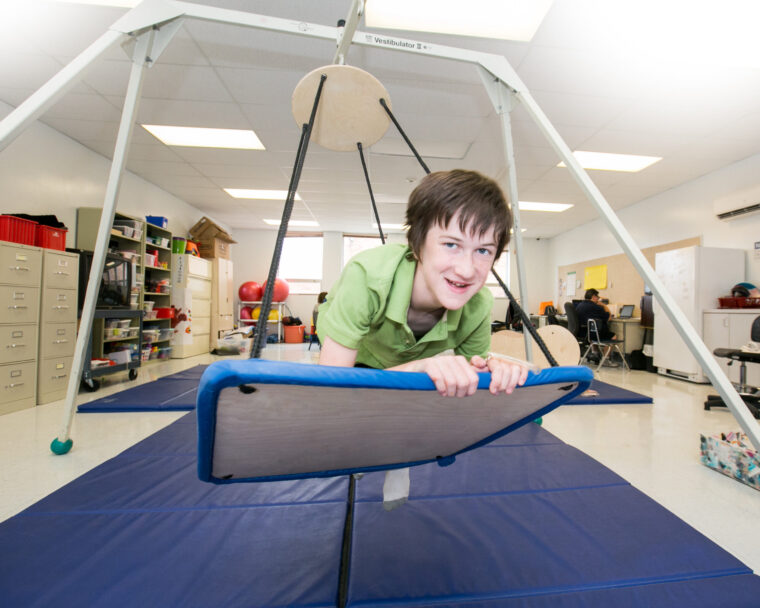
“People say if you know one person with autism you know one person with autism,” Calcatera said. “People can fall anywhere on the spectrum, from very high functioning to needing a lot of support.”
Calcatera noted that the exact cause of autism is still not known.
“There’s been a lot of different studies on whether it’s hereditary or something in the environment. They’ve never come up with an answer for that.”
Instead, autism is thought to be driven by a combination of factors.
Autism is typically diagnosed in early childhood, from 6 months to 2 years old. Testing may be done when developmental milestones like talking, walking or responding to one’s name are delayed.
Many children or adults with autism may experience sensory issues, such as being hypersensitive or less sensitive to lights, sounds, smells, tastes or textures.
They may have issues with things like socialization or social cues.
Families face significant challenges due to the explosion in autism diagnoses, including lengthy waitlists for diagnostic assessments and services.
“Most of the people, most of the kids with autism that we serve, they need more than one type of service. You might need ABA (applied behavior analysis) therapy, speech therapy or occupational therapy. You might need mental health services. A lot of individuals with autism have a co-occurring diagnosis. They might have issues with feeding, maybe they with food, so they might have a feeding disorder or a sleeping disorder.”
According to Calcatera, families often become “road warriors,” driving between multiple providers for fragmented care.
She pointed out that autism affects entire families, with higher divorce rates among couples and the siblings of autistic children sometimes feeling neglected.
Calcatera said Easterseals MORC provides comprehensive, coordinated family-centered services under one roof. Services include autism evaluations, ABA therapy, occupational therapy, speech therapy, feeding clinics, support groups for parents and siblings, mental health services and life skills training.
Their new Comprehensive Autism Center in Waterford had a ribbon cutting in April of 2026.
It features a simulated dentist’s office, simulated hair salon and a simulated apartment for individuals to prepare for those life experiences. They also have a gaming areas for opportunities to learn peer socialization.
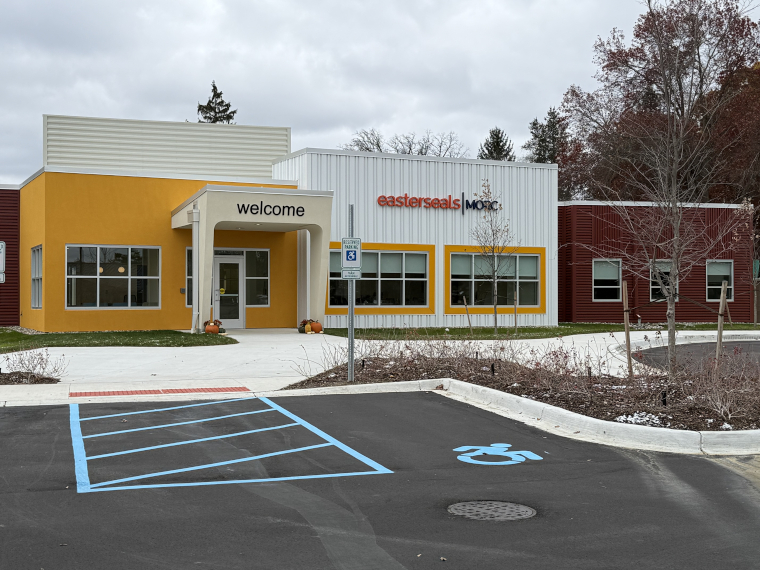
Services are offered for both adults, who often request testing for themselves, and children up to age 18.
Calcatera emphasized that individuals with autism deserve acceptance for who they are. She encouraged everyone around to adjust activities and environments to be more inclusive of people with autism, based on their individual sensory and communication needs.
“A lot of kids with autism have tremendous gifts. They have photographic memories. They can recall anything they’ve ever heard. Some of them have tremendous artistic skill. Some of them can play the piano by ear…”
“…They might process information differently than we do. They might communicate differently. And the way that they do it, it’s not wrong. It’s just different. It’s really taking the time to get to know a person with autism…”
For more information, families can contact Easterseals MORC at 1-800-75-SEALS or visit www.eastersealsmorc.org. On the website, an autism resources directory with clinical team input is available under “Explore Resources” and “Autism Acceptance Month.”
