

Written by Tanya Terry, with photos by Tanya Terry
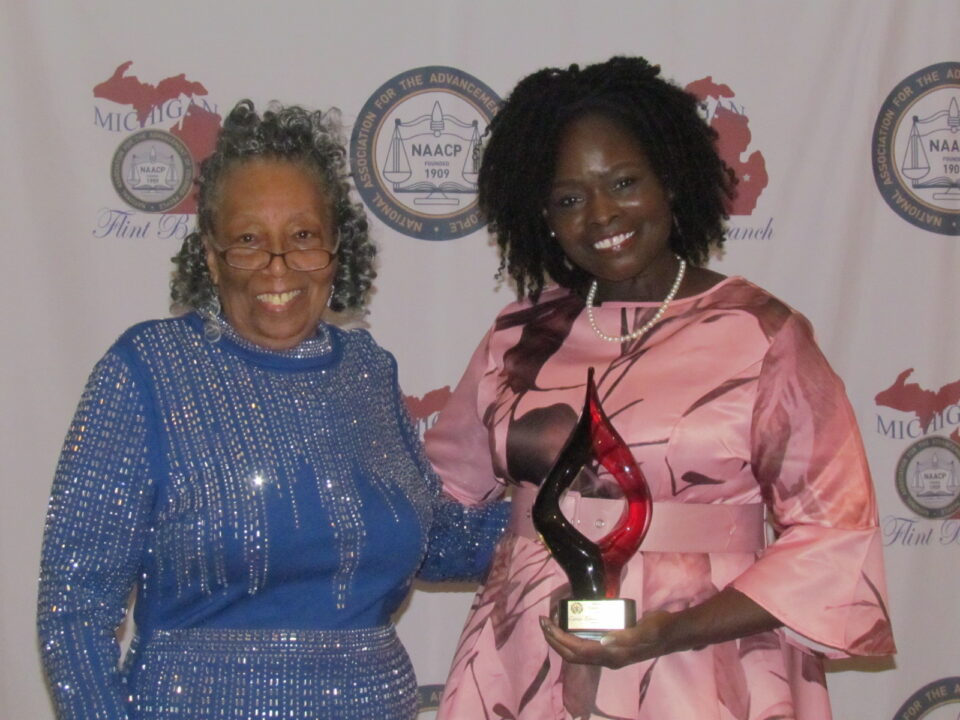
Featured photo: Frances Gilcreast, president of the Flint Branch NAACP (left), was honored to be part of the nonprofit organization giving numerous awards at its recent dinner. Carrie Edwards-Clemons, Fire Chief of the Lansing Fire Department, received the Lenore Croudy Distinguished Leadership Award.
The Flint Branch NAACP recently hosted its 44th Annual Freedom Fund dinner, emphasizing the national theme “We the People.” The event celebrated the organization’s mission to ensure freedom, justice and equality for all.
The yearly black-tie gala was held this year on Saturday, October 10, at St. Michael’s Conference Center, on 5th Ave. The funds raised through the event help the local NAACP fund programs they execute in the community.
“We do voter registration and voter empowerment,” stated Frances Gilcreast, president of the Flint Branch NAACP.
“We try to make sure that we let everyone exercise that precious right to vote. We have a health committee. We have an economic development committee. We have an education committee, and all kinds of committees…That’s our sole purpose is to empower the community to be able to fight off discrimination and racist activities within the communities.
“…We know that a community that’s empowered, it’s able to advocate for themselves. It’s a community that’s able to withstand discriminatory tactics.”
According to Gilcreast, anyone who embraces the ideology of the NAACP is welcome to join the approximately 500 members who are already part of the local branch.
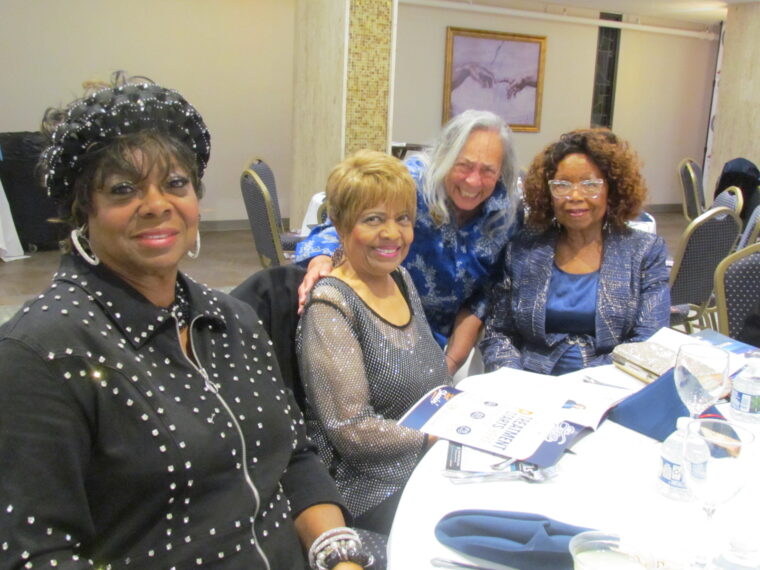
Inez Brown, who attended the event, said her family has been part of the NAACP since her parents arrived in the area back in 1949.
“I just think it’s important that we keep NAACP because it’s historical, and they’ve done so many good things in terms of sacrifice and building up in the African American community, and bringing other people along with us as well,” said Brown.
Both scholarship recipients and local competition medalists for ballet were recognized at the dinner, encouraging community support for students in pursuing higher education and giving back to their communities.
Ella Greene-Morton, Flint NAACP Scholarship chairperson, encouraged the community to help high school students apply for NAACP scholarships.
“We ask you, those of you who are engaged with our young people, our high school students, please when you get these announcements, help our students follow through with us,” said Greene-Morton. “We want our students to apply for these scholarships.”
During the inspirational gala, it was announced that the Flint Branch NAACP had established a new educational award named in honor of Raynetta Speed, former Genesee County Commissioner and prominent community leader. It was given to a Carman-Ainsworth graduate named Aniko Green, who is attending Xavier University in hopes of becoming a radiation oncologist to advocate for underserved communities and improve the quality of life for individuals battling cancer.
Another new award presented by the Flint Branch NAACP was the Changemaker Award, which was given to Amariyanna “Mari” Copeny (also known as Little Miss Flint). It was noted that Copeny has and continues to advocate for clean, affordable water in Flint and other communities.
George Hamo, founder of the Hamo Law Firm, received the C. Fred Robinson Civil Rights Award. The McCree Theatre received the Celia M. Turner Humanitarian Award. Carrie Edwards-Clemons, fire chief of the Lansing Fire Department, received the Lenore Croudy Distinguished Leadership Award and Respected Percussionist Kevin “Baba” Collins received the Vera B. Rison Unsung Hero Award.
Multiple sponsors including UAW Region 1D, Consumers Energy and Mental Health and Recovery Advocate Nick Iliadis expressed commitment to supporting the NAACP’s work.
The preamble of the U.S. Constitution was referenced by Dr. Karen Weaver, a Freedom Fund chairperson. She said the original “we the people” did not include Black ancestors, women or other marginalized communities.
Keynote Speaker Lt. Gov. Garlin Gilchrist encouraged civic engagement through voter registration and communication of priorities to elected officials.
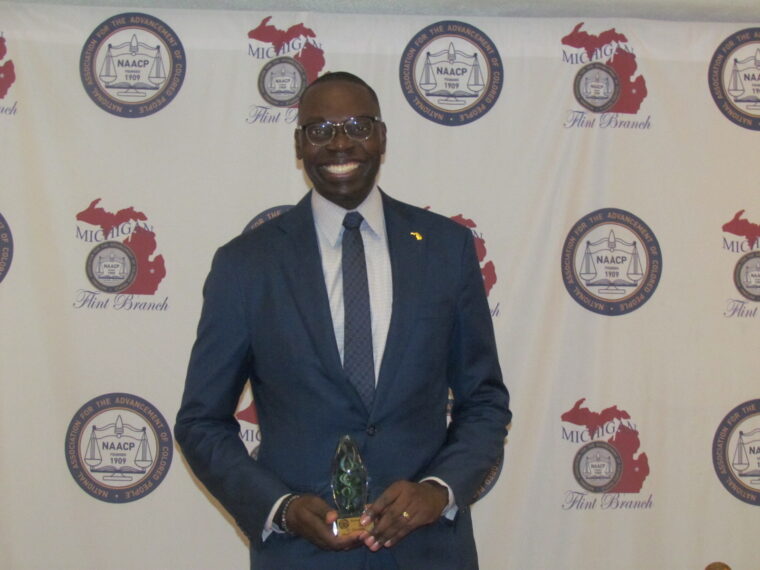
“It’s voters who decide policy, not elected officials who do that,” stated Gilchrist. “It’s voters who set the table. The voters will communicate the priorities. It is the people who show up, who contribute, who communicate, who agitate, who organize, who participate…We all have different tools. We all have different gifts. We all have different sensibilities. We all see things a little bit different.”
Gilchrist challenged attendees to use their voices and unique roles at the ballot box and beyond to realize their own power.
