
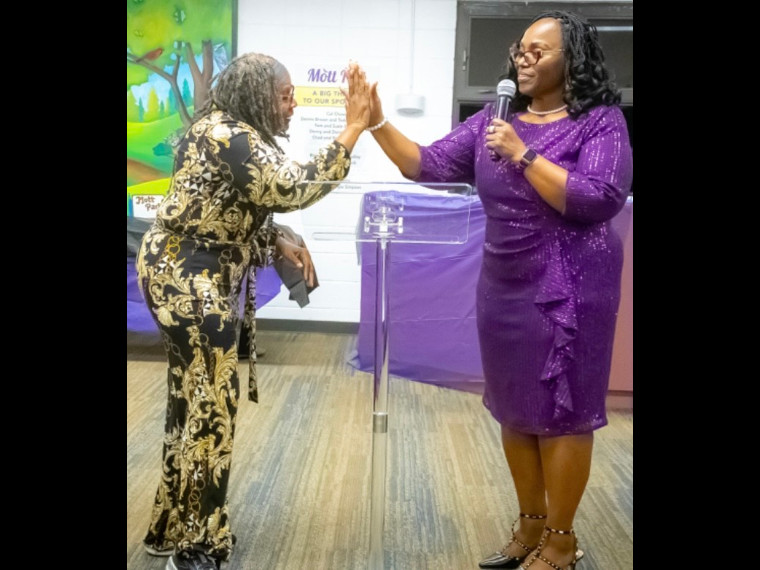
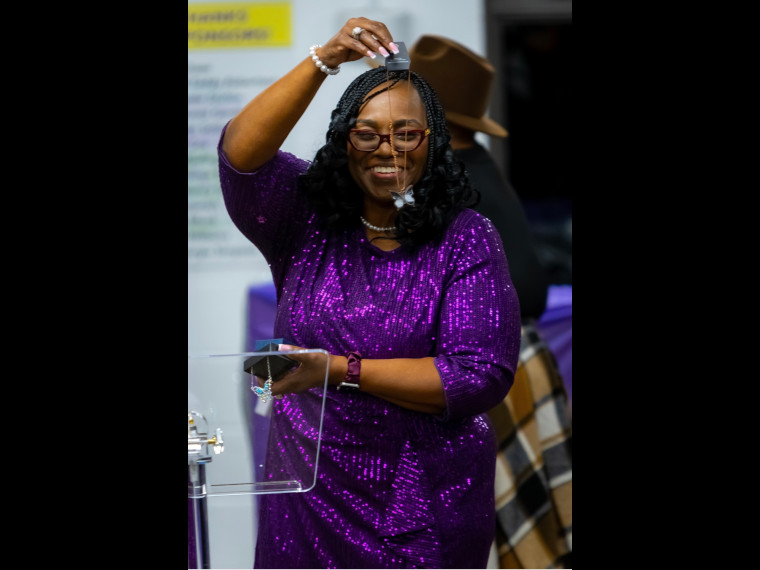
Written by Tanya Terry, with photos courtesy of Dr. Tiffany Quinn
Featured photo: For Dr. Tiffany Quinn, social work is not just about resources, but also about relationships
Dr. Tiffany Quinn has worked in child welfare, education and community-based and faith-based programs, as a social worker.
“Over the years, I’ve walked with families navigating foster care, reunification, grief,” stated Quinn. “Social work is not just about resources, but it’s about relationships.”
Throughout Black History Month, Quinn has been thinking about the history of social work, what she’s been taught and her own experiences.
“As a Black woman in social work, I carry lived experience of discrimination,” she shared. “During Black History Month, I always think about the pioneers who paved the way: Ida B. Wells, and even more locally E. Hill De Loney, Karen Weaver, Linda Itson-just to name a few of the people that are pioneers that helped pave the way for me. I think about the barriers that they faced and the courage it took for them to advocate for people that were overlooked.
According to Quinn, school gave her a foundation, but it’s really her experience working within the community that gave her the true understanding of how complex the systems are.
One situation in which Quinn encountered discrimination was when working with families that were involved within the child welfare system.
“I felt judged and powerless, and it’s because of the systems that remind us that it’s mostly like a hierarchy. So, in this community, most of the supervisors in social work, and the higher-ups and the directors in social work are not Black. They are predominantly Caucausian. They are mostly females. But, the thing about it is, they don’t fully understand the culture of African American or Black people. Just because someone is poor, it doesn’t mean that they are less than, or they should be neglected or their voices shouldn’t be included because of whatever reason it may be.”
Quinn shared that at times when she has reminded others in social work of the context and the culture of the trauma individuals may be experiencing, it has backfired on her. She stated the advocacy was therefore uncomfortable, yet always necessary.
Jane Addams (1860-1935) is called “the mother of social work.” She founded the Hull House in Chicago, which widely is considered the beginning of the social work profession in the United States. She was a U.S. born Caucasian American known for helping immigrants.
However, Quinn pointed out many Black leaders were doing powerful social work even before the profession was formally recognized.
“Definitely in the Black churches, community mothers, educators, neighborhood leaders – they actually were the first social workers. They provided food, and shelter and emotional support-like nurturing and teaching younger women how to care for their children.”
Quinn met E. Hill De Loney at the Flint Odyssey House, where De Loney was teaching women in recovery how to care for their children.
“She helped them navigate social service systems, and showed them how to not be overlooked when they qualified for benefits and things that could help them gain their sobriety again.”
Quinn shared that E. Hill De Loney was not only a community anchor, but also a mentor to her.
“Unseen Heroes: Stories of Triumph in Social Work” is the book Quinn authored along with other social workers on people who, like De Loney, have worked tirelessly behind the scenes.
“All of us had a story of what it took to be a social worker, but also the challenges it took to get a social work degree and be able to help people be able to navigate these systems.”
Quinn told the Courier that as a social worker and a Black woman, she is definitely going to continue pushing for justice and equity by using her own voice. She stated she will continue to use her education to make an impact, as she sits on the boards, even for the State of Michigan.
“I talk about my lived experience, being a mother, raising three children on the north side of Flint. But, justice and equity begins with listening, and truly hearing what people are experiencing. That is a skill, and I am still an active listener….I work with many community partners: GCPC (Genesee County Prevention Coalition), Mothers of Joy, the Crim, Bountiful Love, Building Strong Women, the City of Flint…I’m also a member of Zeta Beta Zeta Flint Chapter…So, this ongoing work that I am definitely dedicated to is the way that I feel empowered to help communities and individuals get the opportunity to have access, especially to resources.”
