Written by Tanya Terry, with featured photo provided by New Creation Church of God Media Team
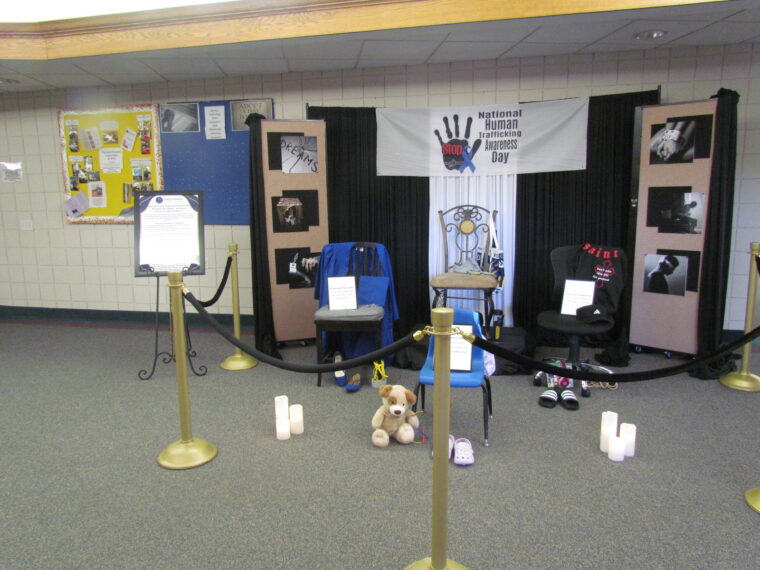
New Creation Church of God’s recent annual human trafficking forum’s focus was on art, storytelling and supporting survivors.
During the entire event, there was an artist named Carla Harden who was creating a piece of art in the background.
“We watched it unfold to this incredible piece of art,” said Mark Staton II, lead pastor at New Creation Church of God.
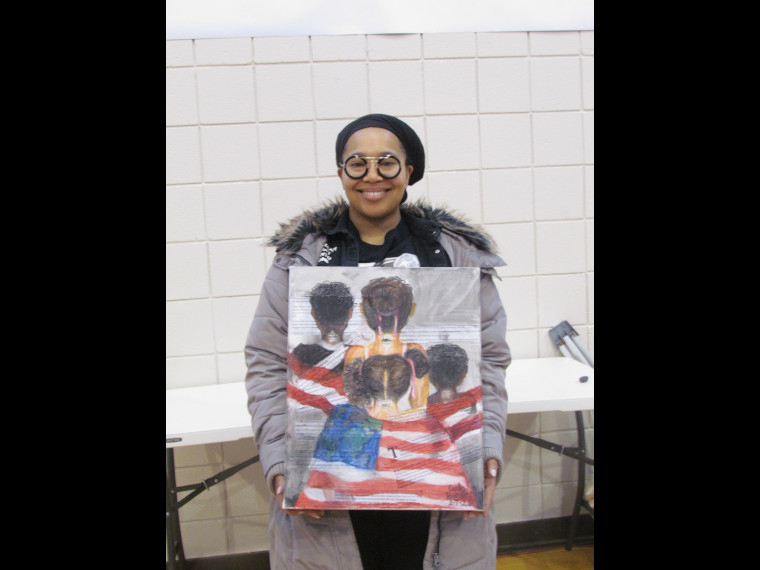
Other pieces of artwork were donated towards the cause of ending human trafficking through the event’s silent auction, with 100% of the proceeds going toward the cause.
Other silent auctions items included baskets, crochet work, blankets, a massage and more.
“We want people to leave with an experience where they were able to hear the stories and empathize with the stories that have happened so we can be motivated to be proactive,” Staton added. “…Art has a tendency to hold us, similar to the way music does.”
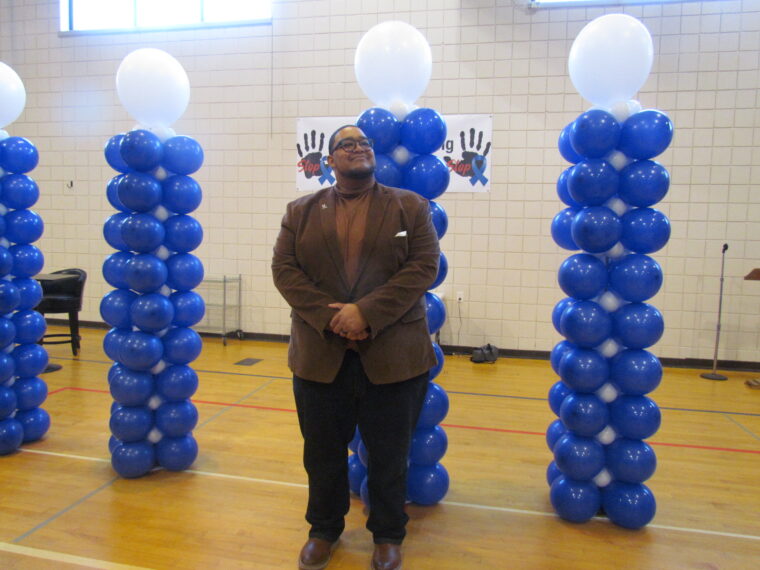
Pastor Mark Staton II’s mother, Rev. Dinah Staton shared her story about being abducted in the Detroit area.
“God held her from being fully assaulted. They kicked her out the car and returned her home. She was saying we have to be careful to not assume it is other neighborhoods where this is happening. It is happening in our own back yards….It could have been a different story for my mother if she had been abducted into human trafficking. I may have never been here.”
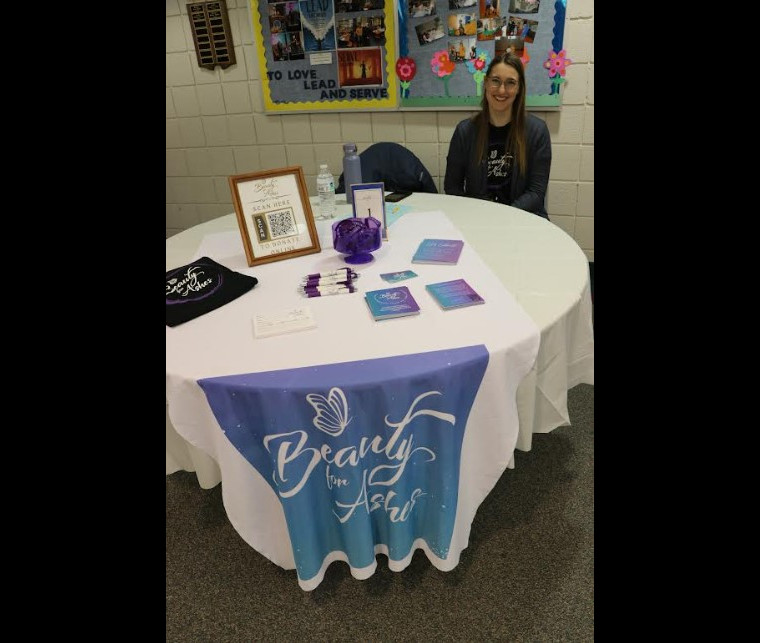
The forum came through a partnership with the sorority Delta Sigma Theta and the church’s Christian Women’s Connection. But there are multiple organizations that are part of the space now. For example, Beauty For Ashes is one of the few organizations dedicated toward the elimination of human trafficking.
Kwami Adoboe-Herrera is founder of Teleios nonprofit organization in Ohio, which supports male survivors of human trafficking through providing shelter and support. It brings awareness to the fact that human trafficking does not just affect women, but it affects male victims, as well.
Adoboe-Herrera came to this country when he was seven years old. He was brought to Michigan from Togo, on the west coast of Africa.
“I came here with my uncle,” he said . “He brought me here during the visa process called asylum. He promised my parents that he was going to provide me education and better life in the U.S.
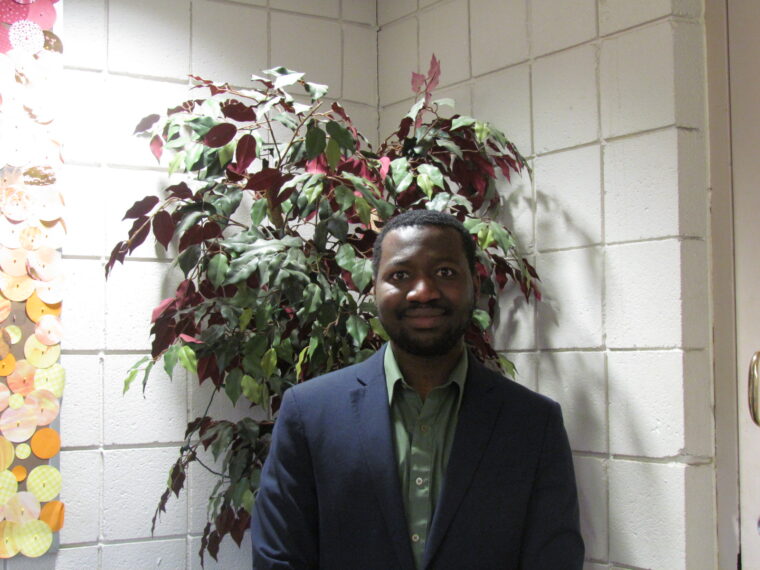
“…But, the next six years of my life were miserable…I was abused, and I was starved by my uncle. He used me as his own personal slave…He sees me as a commodity, making money off me. He will contract me to his friends. We clean houses, cook for him, mow the lawn…He kicked me, hit me, slapped me with his arm or telephone wires, broomsticks, everything.”
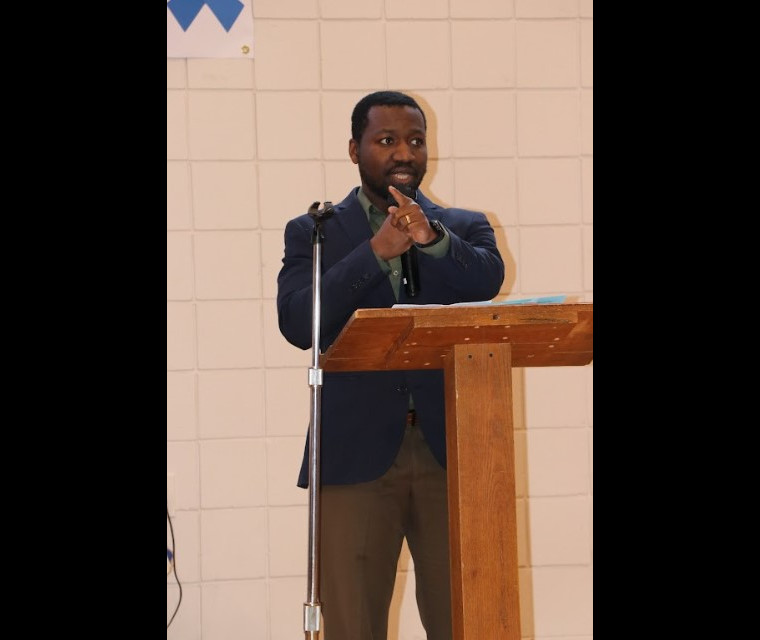
This went on from the time Adoboe-Herrera was seven to when he graduated from middle school. He was later adopted to a “wonderful family.”
“My highest point was when my sixth grade teacher was going to recognize abuse,” shared Adoboe-Herrera. “She saw I was coming to school with ripped jeans. I was withdrawn from my classmates…I was hungry all the time. Sometimes I would smell. Sometimes in the winter time, I was coming to school with some shorts and a T-shirt. So, she was jotting notes down. Then, one day, she said: ‘Hey, can I talk to you?'”
This led to the teacher becoming a mother figure and Adoboe-Herrera being able to escape the devastating lifestyle he was living.
“What she did is she talked to friends of friends, one was an FBI and they came to the school one day. They just removed me and the other three kids from the same village who were being trafficked by my uncle. My uncle was convicted eventually, at the federal level. Then, he was charged by the state of Michigan.”
Because of his experience, Adoboe-Herrera is dedicating his life to helping other male victims of human trafficking, both of labor and sex trafficking
For more information about Teleios, or to donate, visit Teleiospath.org.
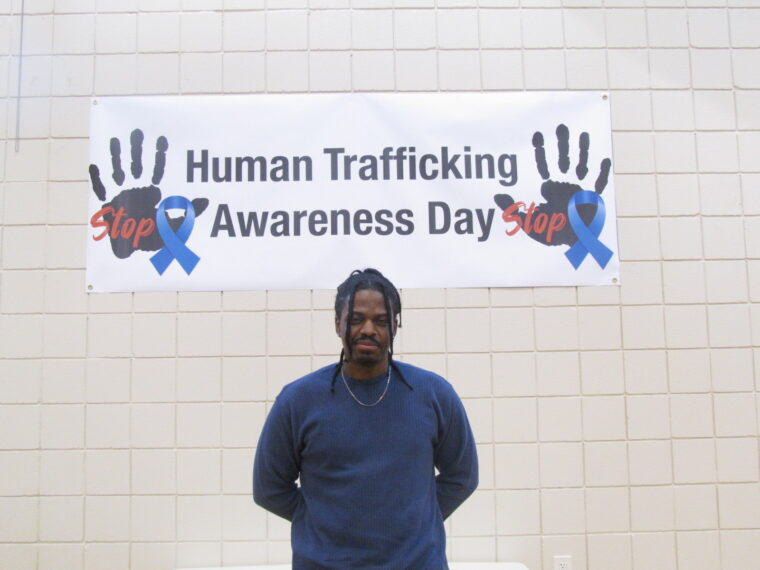
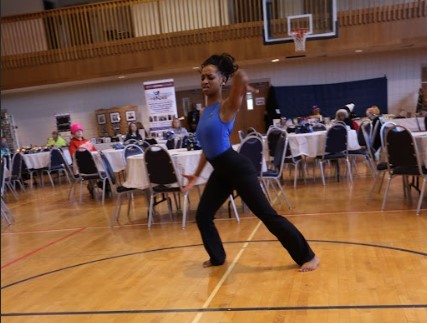
Arnell Darden recited his written word at the forum. He spent time beforehand reading and watching documentaries to put himself in a position to be empathetic. While watching documentaries, he realized some human trafficking survivors were so numbed that they didn’t seem to realize how tragic the things they were speaking about were.
Darden stated: “There is a portion of my poem that says human trafficking doesn’t always knock down doors or kick down doors. Sometimes it can wear dresses. It can wear suits. It can wear smiles and familiarity. Oftentimes, we can assume that someone that’s going to come is going to come with a pitchfork and horns. But, a lot of times, these are people that you may feel comfortable with already, or they seem really nice. So, I think people really need to be aware that what you see on the surface isn’t always what’s underneath.”
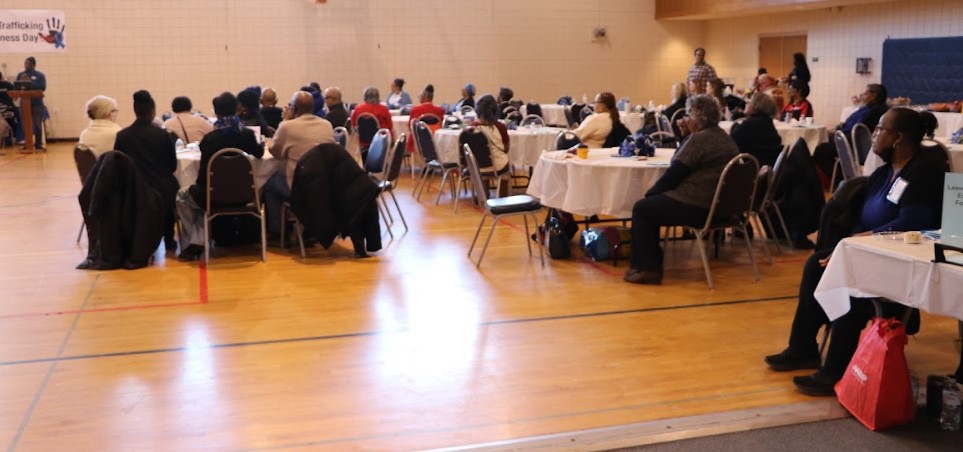
Felicia Watson CWC (Christian Women Connecting) coordinator stated after the forum: “Human trafficking thrives in silence, but today we choose awareness. We choose action. And we choose to stand together as a community.”