


Written by Tanya Terry, with featured photo by Tanya Terry
It has been nine years since the Concerned Pastor for Social Action sued the City of Flint because of the way city officials responded to the Flint Water Crisis.
The lawsuit required replacement of all lead service lines free of charge to residents, proper treatment and monitoring of drinking water for residents in Flint and making water filters available for those residents, as well.
On July 9, 2026, Mayor Sheldon Neeley expressed optimism when announcing the successful resolution of one of the last Flint Water Crisis federal court case resolutions.
“Today, a notice of satisfaction is being filed in the US District Court, confirming all obligations have been met,” Neeley said. “Today’s a great day in the journey. The journey of partnership and working together with the Concerned Pastors in the city of Flint to get a resolve and a great outcome for residents in this wonderful, blessed community.”
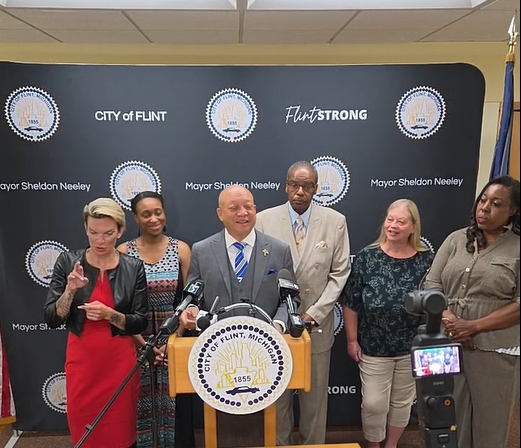
“It’s been a long road to where we are, but it shows that when we work together for the greater good, we see that great things can be accomplished,” said Pastor Alfred Harris, president of the Concerned Pastors for Social Action.
“As president of the Concerned Pastors, I want to mention our co-laborers: Melissa Mays, the ACLU and NRDC that works with us for the purposes of making sure that Flint is 100% restored from the effects of the Water Crisis…We have the City of Flint and those other entities that I mentioned…We can overcome and come out on top. And we still recommend the use of filters in our homes. But I believe it will close out by making this statement: the best is yet to come.”

According to Neeley, there were originally 31,000 lead service lines as it relates to this particular lawsuit, and there are about 30 remaining. Neeley said compiling documents and getting consent from individuals property owners has been a challenge in those cases.
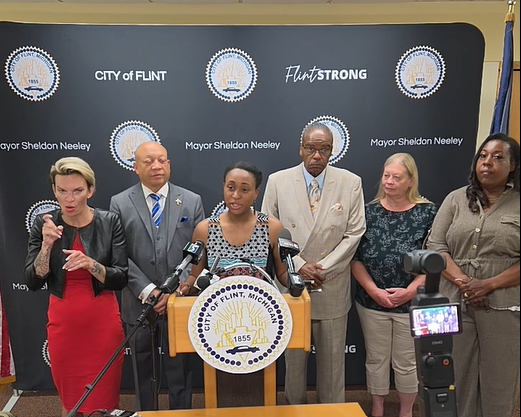
Shebra Ward, public health manager for the City of Flint, stated: “We are glad that we’ve reached this milestone, but of course, we know that residents still need a level of support. And so, the Office of Public Health still has systems available for residents in need. You can come into City Hall, pick one up Monday through Friday, 9 to 5. You can go to the Mays Senior Community Center the same times to pick one up, or the McKinley Community Center. We want residents to know that we are still here to offer support.
The EPA notes that even low levels of lead in the blood of children can cause behavior and learning problems, lower IQ and hyperactivity, slowed growth, hearing problems and anemia. The agency also noted that in rare cases, ingestion of lead can cause seizures, coma and even death of those under 18.
Adults exposed to lead can suffer from cardiovascular effects (increased blood pressure and incidence of hypertension), decreased kidney function and reproductive problems in both men and women, according to the EPA.
Since 2017, plaintiffs Melissa Mays, the Concerned Pastors for Social Action, the ACLU of Michigan and the NRDC went to court six times in six years to make sure the City of Flint kept up with its obligations according to the court ordered settlement in the Safe Drinking Water Act Lawsuit.
