

Written by Tanya Terry, with featured photo by Tanya Terry
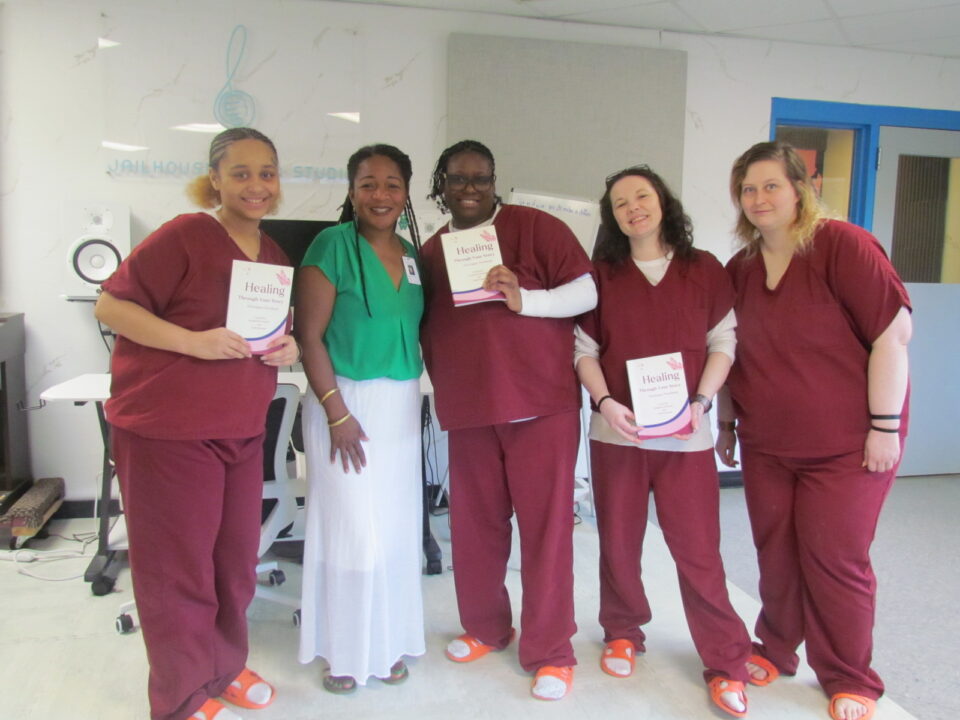
A group of participants in the Healing Through Your Story program were able to take part in a graduation in July 2026, as part of the I.G.N.I.T.E program.
Roshanda Womack, the program facilitator and creator of the “Healing Through Your Story” curriculum, recently discussed the program’s origins and impact. She developed the curriculum based on her work as a professional storyteller and research into storytelling’s healing power, which helps improve literacy and assists people in working through trauma.
“I created healing through your story really because I work as a professional storyteller,” said Womack. “As I began doing more research, I began to understand the healing power of storytelling – that not only can it be used to help improve literacy, but it also is a great tool for helping people to work through trauma.
“My husband was already here in the jail doing some work with the women,” Womack continued. “So, he invited me to come and to try my curriculum out. And we got a great response from the women who participated, just about how helpful it was for them in being able to do some self-reflection and being able to look at their lives from a different perspective and be able to recognize some patterns and begin to realize that they can change their story – that they doesn’t have to continue the way that it.”
Initially started in a jail with female inmates, the program has expanded to also serve both men and women returning citizens after release. The program emphasizes that people should not be defined by their worst decisions and that everyone has redemptive qualities and potential for change.
Womack has been running the program for four years. This particular session was challenging for her personally, but the four women who completed the program demonstrated tenacity and commitment.
The curriculum includes a journal with weekly prompts, quotes, program goals and self-care checklists designed to help participants manage emotions, mindfulness activities and developing healthy routines the participants can continue after release. After the recent graduation, program participants shared their experiences with the Courier.
Darnella Gaines explained how the program inspired her to return to writing poetry as a form of healing and self-expression.
“I have a lot of childhood trauma, growing up in the foster care system and stuff,” shared Gaines. “So, being in this class, it helped me realize some things you have to talk about to let go in order to succeed in life. If you hold on to the past, it’s going to drown you pretty much…I’m starting to learn how to humble myself and control my feelings instead of lashing out and constantly being angry. I put all that frustration into writing, ”
Taylor Mitchell highlighted the value of being in a supportive group with other women who have experienced trauma, and noted that breathing exercises were particularly helpful.
Misty Rouse discussed how the journal prompts helped her process emotions she had been holding in and recognize that mistakes do not define her future.
Haylee Kaiser shared that she wrote poetry during the program and gave her book to her roommate to help her healing journey as well.
All participants emphasized the program’s role in helping them understand that their past mistakes are not the end of their story and that they can create positive change moving forward.
According to the National Sheriff’s Association, The I.G.N.I.T.E. program (Inmate Growth Naturally and Intentionally Through Education) is an initiative created by Genesee County Sheriff Christopher R. Swanson to rehabilitate incarcerated individuals in the Flint area. Launched in 2020 and headquartered at the Genesee County Jail, the program aims to break the cycle of crime and generational incarceration through education, job certification and life-skills development.
“Who Am I” by Darnella Gaines
Who am I is something I wonder every day. I am who I am as a person. I’m proud to be an African American. I’m proud of my skin color. I’m loving, caring -no matter how much my mindset is different. My heart beats and feel different. Deep down inside, who am I? I’m God’s child. No matter what I think or feel, I know I’m God’s child. Who am I? A woman who’s still trying to figure out life, to figure out what I truly desire in life that can bring peace and happiness. Learning who am I, as a woman, I am taking control of my life and leaving the old behind and taking the new me into the future.
Original poetry by Taylor Mitchell
Kick, scream, running and fighting. From my future. I was hiding. Society high on profiling. A criminalI was named. With that, I carry shame. School I thought was lame – until I got behind bars and created a new name. Striving for a GED. Truly focusing on creating a new me. Fame and fortune. One day I will see my baby, my child, a transformed mother she will have. I’ve now learned that the fast life is for the trash.
